
Artikel
Jika Pariwisata Hidup Lagi, Apakah Pertanian Kembali Mati? (bagian 2)
oleh Luh De suriyani [Klungkung] di 29 September 2020Ketika usaha pariwisata di Nusa Penida, Bali, redup saat pandemi ini, pertanian jadi tumpuan hidupApakah pertanian bakal mati lagi jika pariwisata hidup kembali?Sejumlah warga berkomitmen akan berkelanjutan namun perlu dukunganLahan kering dan…
oleh Luh De suriyani [Klungkung] di 29 September 2020
- Ketika usaha pariwisata di Nusa Penida, Bali, redup saat pandemi ini, pertanian jadi tumpuan hidup
- Apakah pertanian bakal mati lagi jika pariwisata hidup kembali?
- Sejumlah warga berkomitmen akan berkelanjutan namun perlu dukungan
- Lahan kering dan ketergantungan pada air hujan jadi tantangan sekaligus adaptasi perubahan iklim di pulau-pulau kecil ini.
- Artikel ini merupakan tulisan kedua dari tiga tulisan tentang dampak pandemi Covid-19 pada warga pulau-pulau di Nusa Penida yang tergantung pada pariwisata. Tulisan pertama bisa dibaca di tautan ini
Janji dan harapan untuk terus bertani rumput laut telah disampaikan sejumlah warga, karena rumput laut lah yang disebut sebagai penyelamat di tengah matinya usaha pariwisata saat pandemi ini.
Namun, keberlanjutan budidaya pertanian mensyaratkan adanya pengolahan, sayangnya unit ini belum digarap serius. Bahkan, sejumlah petani yang ditemui tidak tahu rantai pasok komoditas rumput laut ini. Jawabannya, hasil panen diambil pengepul yang akan membawa ke luar pulau Bali.
Diolah jadi apa apa, dengan harga berapa, atau bagaimana diolah, masih jadi tanda tanya. “Katanya jadi kosmetik,” sebut Wayan Sugarma, petani rumput laut di Desa Suana, Nusa Penida yang baru empat bulan bertani setelah dirumahkan dari sebuah kawasan villa mewah. Demikian juga Made Jaya, petani di Lembongan. Pasca panen rumput laut masih abu-abu karena sentra pengolahan tidak dikembangkan.
Wayan Suwarbawa, salah satu tokoh rumput laut di Nusa Lembongan, Kecamatan Nusa Penida, Kabupaten Klungkung, Bali ini mengatakan setidaknya ada empat nama pengepul di Lembongan yang sebagian membawa ke pulau Nusa Penida, sebelum dikirim lagi ke luar pulau. Sebagian lagi ada yang mendistribusikan ke Klungkung daratan, dan langsung ke Surabaya.
Ia sendiri mencoba memanfaatkan rumput laut menjadi pangan di rumah. Misalnya mengolah jadi lawar, jus, dan campuran nasi. Sejumlah pelatihan atau kelompok pengolah rumput laut jadi camilan pernah ada, namun tak berlanjut. Hanya muncul saat pameran pembangunan.
Pengolahan atau kegiatan pasca panen diyakini memberi nilai tambah bagi petani. Juga menambah lapangan kerja untuk yang tidak mau berendam di laut memasang patok, tali, dan merawat rumput laut setiap hari.
baca : Pariwisata Mati, Rumput Laut Hidup Lagi (bagian 1)

Salah satu pengepul atau pembeli rumput laut dari petani Mokoh Wijaya mengatakan ia memerlukan dukungan untuk mendampingi petani agar kualitas rumput laut lebih baik sehingga meningkatkan nilainya. “Standar kualitasnya belum bagus. Berusaha mengedukasi petani biar bisa menyediakan standar pabrik. Belum bisa memenuhi standar. Perlu biaya lagi untuk penjemuran dan pembersihan,” ujarnya. Pabrik minta kadar airnya 36-37% sementara petani masih 39-40%.
Setelah beli dari petani, ia langsung membawa ke pabrik pengolahan di Surabaya. Diolah jadi tepung karagenan rumput laut. Jumlah yang dikirim sekitar 10-12 ton rata-rata per 3 bulan karena banyak pengepul atau pembeli lainnya. Selain itu, hasil panen belum banyak karena rumput laut baru dibudidayakan lagi di Lembongan. Sebagian digunakan untuk bibit.
Ia fokus jadi pengumpul karena setelah Covid-19 sudah tak bisa aktif bekerja sebagai tim pemasaran online hotel dan villa di Nusa Penida. Wijaya juga menjual sarana budidaya rumput laut seperti tali tampar, rafia, plastik es, terpal untuk penjemuran, jaring, dan lainnya. “Bantu petani biar bisa mendapat harga kompetitif, ambil barang di Surabaya,” imbuhnya. Harganya disebut lebih murah sekitar Rp10 ribu per item/roll dibanding beli di Nusa Penida.
Wijaya menyebut warga Lembongan dan Nusa Penida beruntung karena ada alternatif untuk survive saat pariwisata mati dampak corona. Rumput laut termasuk komoditas ekspor, harganya fluktuatif. Saat ini, per Agustus-September, harga turun, dari Rp15.500 jadi Rp13.000 per kg.
Menurutnya sektor pengolahan perlu dikembangkan. Agar yang dijual dari Nusa Penida bukan rumput laut raw, tapi sudah diproses seperti dicacah dan diputihkan.
Namun untuk mengolah siap ekspor seperti pabrik di Surabaya, menurutnya belum siap karena panen belum memenuhi kapasitas pabrik. Sementara di Surabaya beli dari pulau-pulau lain seperti Indonesia Timur.
Siasat lain adalah home industry seperti mengolah jadi salad, dodol, jus, kue, dan lainnya. “Istri saya coba buat kue rumput laut, sempat jual di pasar dan keperluan upacara. Masyarakat kita belum banyak tahu manfaatnya, bagus sekali untuk kesehatan. Belum jadi budaya untuk konsumsi,” sebut Wijaya.
I Gede Sedana, Rektor Universitas Dwijendra di Denpasar yang juga peneliti pertanian mengatakan salah satu unsur keberlanjutan pertanian adalah pengembangan hulu dan hilir. Di hulu misalnya penyediaan bibit dan sarana pertanian, di hilir adalah pra dan pasca panen. “Jangan sampai produksi saja, tapi pengolahan [tertinggal],” ujarnya.
baca juga : Nasib Petani Rumput Laut di Kawasan Konservasi Perairan Nusa Penida

Budidaya porang
Komitmen untuk bertani walau pariwisata hidup lagi, juga dilontarkan Wayan Sukadana, seorang pengusaha akomodasi di Desa Suana, Nusa Penida, yang kini merintis sejumlah komoditas pertanian. Termasuk porang, sejenis umbi yang belum familiar di pulau ini.
Wayan Sukadana terlihat bersemangat membahas masa depan porang. Ia mengajak ke kebun pembibitan di desa tetangganya, Pejukutan. Ia memanfaatkan lahan di bawah pohon-pohon jati untuk menanam ribuan bibit porang dalam kantung polybag.
Untuk mengantisipasi panas dan air hujan, ia memasang paranet yang menaungi keseluruhan bibit. Kebun jati yang gersang ini terlihat lebih rimbun dan teduh. Sukadana mengajukan tiga alasan kenapa ia bernyali memulai budidaya porang yang tak banyak diketahui orang. “Masalah pertanian di Nusa Penida adalah kera, air, dan alih fungsi lahan jati. Porang bisa jawab masalah itu,” sebutnya antusias.
Porang menurutnya bisa juga jadi pangan alternatif selain ketela pohon, pisang, jagung, dan lainnya yang sudah tumbuh di pulau berkapur dan berkarang ini. Ia sudah membaca dan menonton banyak video soal budidaya porang dan hasil olahannya.
Dikutip dari laman Badan Penyuluh dan Pengembangan Sumberdaya Manusia Pertanian Kementrian Pertanian, Umbi Porang (Amorphophallus mueleri blume) disebut memiliki nilai ekonomis yang tinggi dan merupakan komoditas utama tanaman pangan yang berorientasi ekspor. Saat ini, Indonesia mengekspor porang dalam bentuk chips (irisan tipis), kemudian di negara tujuan diolah kembali sebagai bahan pangan dan kosmetik. Permintaan porang banyak berasal dari Jepang, Cina, Vietnam dan Australia dengan total ekspor porang sekitar 11.170 ton.
Setelah dipanen, umbi porang dibersihkan dari kotoran berupa tanah dan akar yang menempel. Setelah itu, dilakukan pengolahan dengan menjadikan umbi porang sebagai chip porang ataupun dapat dijadikan tepung porang. Tepung glukomonan disebut bahan baku mie jepang (shirataki), konyaku, lem, dan lainnya.
perlu dibaca : Melirik Talas Sebagai Potensi Pangan Masyarakat Indonesia

Bahkan, Sukadana sudah membuat website khusus, tanamanporang.com yang berisi rangkuman informasi cara budidaya, perhitungan modal, bibit, dan lainnya. Saking intensnya pada komoditas baru ini, ia berhasil meyakinkan beberapa warga lain untuk ikut membudidayakan.
Salah satunya Wayan Pedoman, seorang guru. Ia juga menunjukkan lahan dan hamparan 14 ribu bibit yang sudah dibelinya. Saking semangatnya, ia membuka jalan menuju kebun dengan ekskavator, menjual sebagian pohon jati yang ditanam, dan beli sebuah pick-up untuk mengangkut sarana. Kini kebun setengah hektar itu ditata dengan sebuah pondokan tempat rehat dan ngobrol.
Sukadana menyebut, pertanian adalah masa depannya. Padahal ia baru tiga tahun ini merintis dan mengelola dua jenis akomodasi ketika pariwisata Nusa Penida berkembang pesat. Jika pariwisata bangkit lagi, ia berjanji akan terus fokus di usaha ini walau memiliki dua unit akomodasi. Menurutnya pariwisata tak bisa ajeg, terlebih dalam kondisi pandemi yang tak jelas.
Setelah mendengar penjelasan dan informasi budidaya porang ini, pilihan komoditas ini bukan hal mudah. Perlu modal besar untuk memperoleh bibit dan ketekunan karena jangka waktu panen bervariasi tergantung jenis bibit, dari 1-4 tahun.
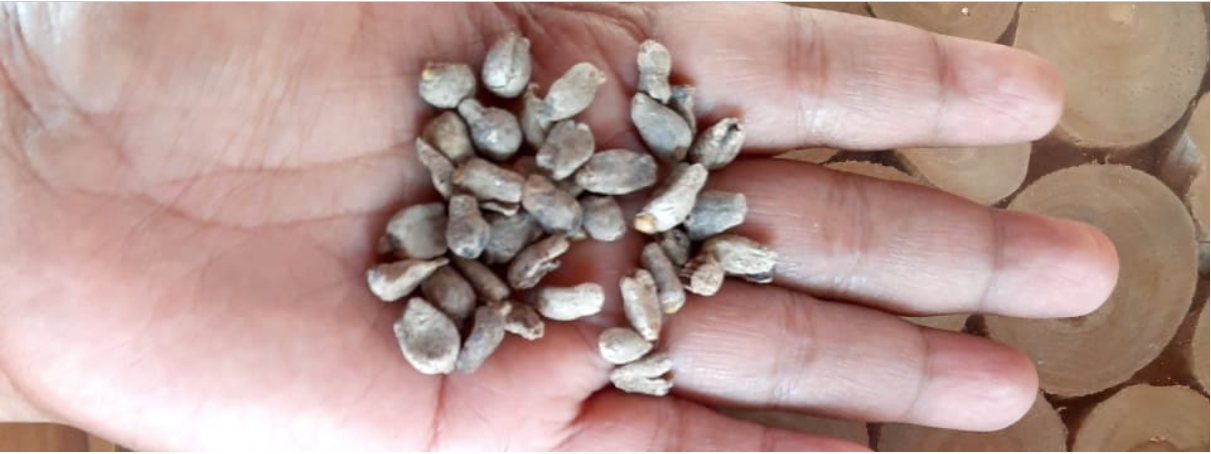
Sukadana menjelaskan, bibit bisa dibeli dari petani yang telah membudidayakan atau hutan asal porang, Jawa atau Flores. Jenis bibitnya ada 3, biji spora (3-4 tahun), katak atau bubil porang (2 tahun), benih dari umbi porang (1 tahun).
Panen berupa umbi dengan ukuran minimal 500 gram. Harga penjualan basah bervariasi tergantung musim, antara Rp5000-14.000 per kg. Jika jual kering setelah diiris harganya berlipat 5-7 kali lebih mahal dibanding harga basah.
baca juga : Warga Sikka Mengkonsumsi Ubi Beracun. Apa Penyebabnya?

Sukadana menyebut panen akan dibeli pengepul, lalu dikirim pabrik ke Jawa atau Bali untuk diiris dan dikeringkan, kemudian diekspor oleh pabrik ke Cina, Jepang, Amerika, dan Eropa. “Di Jawa ada 14 pabrik porang,” urainya.
Produk olahannya seperti tepung, beras, obat, lem, dan lainnya. Salah satu tokoh patronnya di budidaya porang adalah Paidi yang melakukan budidaya, pelatihan, penjualan benih, pembelian porang basah, dan wisata porang di Madiun, Jawa Timur.
Ia sendiri berencana memodali dengan 40-100 ribu bibit yang akan ditanam di lahan sekitar satu hektar. “Penipuan dan pencurian bisa jadi tantangannya,” sebut Sukadana karena nilai ekonomis bibit porang.
Tekadnya untuk terjun ke bisnis pertanian juga dibuktikan dengan membuat Nusa Dua Farm, kebun sekaligus tempat diskusi pertanian. Ia menunjukkan struktur rumah kayu sederhana yang sedang dibangun di kebun.
Ia mengakui tak mudah memulai bisnis pertanian di Nusa Penida. Selain tiga faktor tadi, kera, sulit air, dan lahan, petani juga menggunakan modal sendiri yang besarannya terbatas. Ia menyontohkan warga yang kembali bertani rumput laut kebanyakan memodali sendiri. “Bapak saya beli bibit, patok, jaring, modal sendiri Rp10 juta. Pasar gotong royong pertanian perlu dievaluasi karena pasar lain jadi sepi, yang beli PNS. Harus fokus ke padat karya dan pertanian,” ia mengusulkan strategi pemulihan ekonomi.
Tak sedikit program pemerintah yang gagal atau tak berkelanjutan di pertanian, misalnya ia mengingat Nusa Penida pernah gagal tanam jarak, ginseng, lidah buaya, dan lainya. “Saya belajar dari itu, pertanian tidak bisa instan, pembelajaran penting,” ingatnya.
by Luh De suriyani [Klungkung] on 29 September 2020
- When the tourism business in Nusa Penida, Bali, dimmed during this pandemic, agriculture became the basis of life
- Will agriculture die again if tourism comes back?
- A number of residents are committed to sustainability but need support
- Dry land and dependence on rainwater are challenges and adaptation to climate change on these small islands.
- This article is the second of three articles about the impact of the Covid-19 pandemic on residents of the islands of Nusa Penida who depend on tourism. The first article can be read at this link
A number of residents have made promises and hopes to continue farming seaweed, because seaweed is said to be a savior amidst the death of tourism businesses during this pandemic.
However, the sustainability of agricultural cultivation requires processing, unfortunately this unit has not been worked on seriously. In fact, a number of farmers we met did not know the supply chain for this seaweed commodity. The answer is, the harvest is taken by collectors who will take it outside the island of Bali.
What is it processed into, at what price, or how is it processed, is still a question mark. "They say it's made into cosmetics," said Wayan Sugarma, a seaweed farmer in Suana Village, Nusa Penida who has only been farming for four months after being laid off from a luxury villa area. Likewise Made Jaya, a farmer in Lembongan. Post-harvest seaweed is still gray because processing centers are not developed.
Wayan Suwarbawa, one of the seaweed figures in Nusa Lembongan, Nusa Penida District, Klungkung Regency, Bali, said that there are at least four names of collectors in Lembongan, some of whom take them to the island of Nusa Penida, before sending them back outside the island. Others distribute it to mainland Klungkung, and directly to Surabaya.
He himself tries to use seaweed as food at home. For example, processing it into lawar, juice and rice mixture. A number of trainings or groups for processing seaweed as snacks have existed, but have not continued. Only appears during development fairs.
Post-harvest processing or activities are believed to provide added value for farmers. It also increases job opportunities for those who don't want to soak in the sea, installing stakes, ropes and caring for seaweed every day
read: Tourism dies, seaweed lives again (part 1)
Most residents of Lembongan, Nusa Penida, Bali, returned to seaweed farming when the tourism sector collapsed during this pandemic. Photo: Luh De Suriyani/Mongabay Indonesia
One of the seaweed collectors or buyers from farmers, Mokoh Wijaya, said he needed support to assist farmers so that the quality of the seaweed was better, thereby increasing its value. “The quality standards are not yet good. Trying to educate farmers so they can provide factory standards. Not yet able to meet standards. "We need more costs for drying and cleaning," he said. Factories ask for a water content of 36-37% while farmers still ask for 39-40%.
After buying from the farmer, he immediately took it to the processing factory in Surabaya. Processed into seaweed carrageenan flour. The amount sent is around 10-12 tons on average per 3 months because there are many collectors or other buyers. Apart from that, the harvest has not been much because seaweed has only just been cultivated again on Lembongan. Some are used for seeds.
He focuses on being a collector because after Covid-19 he can no longer actively work as an online marketing team for hotels and villas in Nusa Penida. Wijaya also sells seaweed cultivation facilities such as slap rope, raffia, ice plastic, tarpaulin for drying, nets, and others. "Help farmers so they can get competitive prices, pick up goods in Surabaya," he added. The price is said to be around IDR 10 thousand cheaper per item/roll than buying it in Nusa Penida.
Wijaya said the residents of Lembongan and Nusa Penida were lucky because there were alternatives to survive when tourism died due to corona. Seaweed is an export commodity, its price fluctuates. Currently, as of August-September, the price has dropped, from IDR 15,500 to IDR 13,000 per kg.
According to him, the processing sector needs to be developed. The agar sold from Nusa Penida is not raw seaweed, but has been processed, such as chopped and bleached.
However, according to him, processing ready for export, such as the factory in Surabaya, is not ready because the harvest has not yet met the factory's capacity. Meanwhile in Surabaya, buy from other islands such as Eastern Indonesia.
Another strategy is home industry, such as processing it into salad, dodol, juice, cakes and others. “My wife tried to make seaweed cakes, she sold them at the market and for ceremonial purposes. Our society doesn't know much about its benefits, it's very good for health. "It hasn't become a culture for consumption," said Wijaya.
I Gede Sedana, Chancellor of Dwijendra University in Denpasar who is also an agricultural researcher, said that one element of agricultural sustainability is upstream and downstream development. Upstream, for example, providing seeds and agricultural facilities, downstream is pre- and post-harvest. "Don't let production alone, but processing [be left behind]," he said.
Also read: The fate of seaweed farmers in the Nusa Penida Marine Conservation Area
These terraces on rocky and rocky land were created in the past as a sign of the hard work of Nusa Penida farmers in cultivating their land. Photo: Luh De Suriyani/Mongabay Indonesia
Porang Cultivation
Wayan Sukadana, an accommodation entrepreneur in Suana Village, Nusa Penida, who is now pioneering a number of agricultural commodities, also expressed his commitment to farming even though tourism is alive again. Including porang, a type of tuber that is not yet familiar on this island.
Wayan Sukadana looks enthusiastic about discussing the future of porang. He took him to the nursery in his neighboring village, Pejukutan. He used the land under teak trees to plant thousands of porang seeds in polybags.
To anticipate heat and rainwater, he installed paranets that shaded all the seedlings. This barren teak garden looks more lush and shady. Sukadana proposed three reasons why he dared to start cultivating porang, which not many people know about. “The agricultural problems in Nusa Penida are monkeys, water and the conversion of teak land. "Porang can answer that problem," he said enthusiastically.
According to him, porang can also be an alternative food to cassava, bananas, corn and others that already grow on this chalky and coral island. He has read and watched many videos about porang cultivation and its processed products.
Quoted from the page of the Agricultural Extension and Human Resources Development Agency of the Ministry of Agriculture, Porang tubers (Amorphophallus mueleri blume) are said to have high economic value and are the main export-oriented food crop commodity. Currently, Indonesia exports porang in the form of chips (thin slices), then in the destination country it is reprocessed as a food ingredient and cosmetics. Much demand for porang comes from Japan, China, Vietnam and Australia with total porang exports of around 11,170 tons.
After being harvested, the porang tubers are cleaned from dirt in the form of soil and attached roots. After that, processing is carried out by making porang tubers into porang chips or can be made into porang flour. Glucomonan flour is a raw material for Japanese noodles (shirataki), konyaku, glue, and others.
Need to read: Looking at Taro as a Food Potential for Indonesian People
Two Nusa Penida residents are currently cultivating porang, a commodity that is unfamiliar and considered to have potential. Photo: Luh De Suriyani/Mongabay Indonesia
In fact, Sukadana has created a special website,plantporang.com, which contains a summary of information on cultivation methods, capital calculations, seeds, and others. He was so intense about this new commodity that he managed to convince several other residents to join in cultivating it.
One of them is Wayan Ponsel, a teacher. He also showed the land and the 14 thousand seeds he had purchased. He was so enthusiastic that he opened the road to the garden with an excavator, sold some of the teak trees he had planted, and bought a pick-up to transport the equipment. Now the half hectare garden is arranged with a hut where you can rest and chat.
Sukadana said that agriculture is his future. In fact, he has only pioneered and managed two types of accommodation for the past three years when Nusa Penida tourism was growing rapidly. If tourism revives, he promised to continue to focus on this business even though he has two accommodation units. According to him, tourism cannot be stable, especially in unclear pandemic conditions.
After hearing the explanation and information about porang cultivation, choosing this commodity is not easy. It requires large capital to obtain seeds and perseverance because the harvest period varies depending on the type of seed, from 1-4 years.
Sukadana explained that seeds can be purchased from farmers who have cultivated porang or native forests, Java or Flores. There are 3 types of seeds, spore seeds (3-4 years), frog or porang tubers (2 years), seeds from porang tubers (1 year).
Harvest in the form of tubers with a minimum size of 500 grams. Wet sales prices vary depending on the season, between IDR 5,000-14,000 per kg. If you sell it dry after slicing, the price is 5-7 times more expensive than the wet price.
Also read: Sikka Residents Consume Poisonous Sweet Potatoes. What caused it?
Two types of porang seeds are planted and require a harvest time of 1-3 years. Photo: Luh De Suriyani/Mongabay Indonesia
Sukadana said the harvest would be bought by collectors, then sent by the factory to Java or Bali to be sliced and dried, then exported by the factory to China, Japan, America and Europe. "In Java there are 14 porang factories," he explained.
Processed products include flour, rice, medicine, glue, and others. One of the patron figures in porang cultivation is Paidi who carries out cultivation, training, selling seeds, purchasing wet porang, and porang tourism in Madiun, East Java.
He himself plans to invest with 40-100 thousand seeds which will be planted on about one hectare of land. "Fraud and theft can be a challenge," said Sukadana because of the economic value of porang seeds.
His determination to enter the agricultural business was also proven by creating Nusa Dua Farm, a garden and place for agricultural discussions. He shows a simple wooden house structure being built in the garden.
He admits that it is not easy to start an agricultural business in Nusa Penida. Apart from the three factors mentioned above, monkeys, water shortages and land, farmers also use their own capital, which is limited. He gave the example of residents who returned to seaweed farming, mostly using their own capital. “My father bought seeds, stakes, nets, with his own capital of IDR 10 million. The agricultural mutual cooperation market needs to be evaluated because other markets are empty of civil servants. "We must focus on labor-intensive work and agriculture," he proposed an economic recovery strategy.
There are quite a few government programs that have failed or are unsustainable in agriculture, for example, he remembers that Nusa Penida had failed to plant jatropha, ginseng, aloe vera, and others. "I learned from that, agriculture cannot be instantaneous, important learning," he remembered.


